Tuesday, January 3, 2012

2011: A year of challenge

2011 was certainly a challenging year. First of all, a lot of things have happened in the world: The global economic crisis, the euro close to it's collapse, occupy (fill in)-movements, unrest in Syria, Egypt, earthquakes, and so many other events that will be kept in our minds for quite some time.

For me personally, 2011 was also a year with full of changes. I started the year at a New Year Party in Vilnius/Lithuania (with -20 degrees outside), recalled memories in Oslo/Norway in February, spent family time in Madrid/Spain in March, visited museums in St. Petersburg in April, and initiated my move to Hong Kong 5 days later. After that, Japan, Singapore and Taiwan, China and Macau were also stamped in my Passport.

It is obvious that Hong Kong left the biggest impression on me this year. 2011 was the year I moved to Hong Kong permanently, and gave up my (quite comfortable) life in The Netherlands. But so far, it has been a great experience, with lots of discoveries and new impressions, some of which you have been reading here on my blog.

But I must say, that my move also left a mark on myself. Moving to a new country, leaving everything behind, and trying to adapt to the new culture and environment has been tougher than I expected. The climate, the food, the busy city, all took a physical toll on me. Frequently lacking energy due to the life-work imbalance, insomnia due to 24hr noise, nose and throat problems due to bad air quality, I experienced it all. Luckily, day by day I am getting more used to it, and hopefully I will be able to deal with it all.

Also the challenge of leaving all my friends and family combined with the mental pressure of the Hong Kong daily life (to which I am trying to fit in) has been tougher than I expected. But I still feel that moving here has been the best decision of my life so far.

To conclude my 2011 experiences, I can say, always try to achieve what you are dreaming about.

"The best way to make your dreams come true is to wake up."
(French Philosopher Paul Valery)


Thank you all for reading my blog and for the emails and replies you have sent me. I appreciate it very much! Also a big thanks to my family and my friends who supported me during all this time!

Roald.

Sunday, December 11, 2011

Civilization at its best?

Some of you might already know that Macau is a place that is special to me.
Macau, an sort-of-island (as it is so attached to the mainland) is located one hour away from Hong Kong and is like Hong Kong a so-called "Special Administrative Zone" of China. The place has been in Portuguese hands since the 16h century (although the Dutch have repeatedly trying to conquer it), but has been handed over to back to the People's Republic in 1999.

Macau is not only a special place to me personally, but in general it is considered special in this region, because it has legalized gambling to such a certain extend, that it has influenced the area tremendously. Besides that, it is a tax haven for offshore companies and inhabitants, and there are no foreign currency controls such as in China. Investors are also heavily stimulated by the government to invest in Macau, partly due to the eased tax-policies.

A glimpse of Macau at night. Casino neon lights
I have only been in Macau since the beginning of this year, but if you look into the history of this place, you can understand that the inhabitants have experienced a huge transition. Since the handover in 1999, the place has seen an annual economic growth of 13%. While before, the main income was only generated by trading and local activities such as fishing, nowadays the biggest income comes from tourism, and especially the gambling industry. In 2006 Macau overtook Las Vegas in gambling revenue with 23 Billion US$, but this year they expect that number to be 5 times higher.

When I walk through Macau, I have mixed feelings about the place. The casino's, some of the biggest in the world, are enormous and endless and (for a Dutch guy) almost beyond imagination. Let me give some examples.

The Venetian Resort, over 3000 hotel rooms, casino and
shops
When you enter The Venetian (a copy of Venice), you can walk for an hour through the shopping malls in Venice style streets, with canals and even the same venetian boats (with opera-singing boatmen). The ceiling is painted like a cloudy sky and constantly changes light so you won't feel tired. There is more than 51000 square meter of casino floorspace, filled with endless rows of slot machines, poker tables, cashiers and ATM machines. Besides that, they have an hotel inside the building with 3000 rooms.

The Galaxy (which has just been opened this year) features an enormous entrance with a huge hall where you have quarterly fountain shows, marmer floors, toilets, and LV, Gucci and Rolex stores everywhere you look. There are two hotels inside, offering a total of 2200 rooms, and an enormous swimming pool on top of the building.

The canals inside the Venetian
Some day when I was visiting the Venetian for the first time, I literally got lost as it is such a huge complex. I was looking for the exit for almost half an hour, walking around in the Venetian streets, the gambling halls and food courts, until I finally managed to escape to the right place. My god!

One thing that amazes me in Macau, is how the local people deal with the transformation that is going  on. As western people, like me, you have the idea that Asia is still a developing country, and that there are some rich people, but the majority has a far lower life standard than us. If you want to blow away this illusion, Macau is definitely the place to visit.

First of all, you cannot get a decent hotel room for under 120 euro during the weekend. Everything below that amount I would not even let my dog stay for the night. An average room in a decent hotel will cost you between 150 and 200 euro per night. The food and drinks in Casino's are far higher priced than most of the restaurants I know in The Netherlands, although you can have an excellent meal for a very good price when you take a step outside the casino's and go to the places where the locals eat.

Besides that, you will see so many expensive shops such as LV, Gucci, Hermes, and they are all fully occupied, sometimes even with waiting queues outside to have the rich Chinese orderly wait before they spend thousands of dollars. Expensive cars drive around in the city as it is normal to own a Ferrari or Maserati.

Besides luxury goods and expensive cars, there are lots of women where you can spend your earned gambling money on. You see advertisements everywhere to call prostitutes, they walk around in hotels looking for big money spenders, and for the insiders, there is even a place where you can take a seat, and watch them stroll by (and select one like it is a meat market). I happened to get this location from a friend of mine, and of course I had to take a visit just to see what is going on there.

The place where it all happens is an ordinary shopping mall, located next to the old Lisboa casino. Inside, on the main floor there is a long hall with shops, where dressed-up Chinese ladies with short skirts and high heels parade through the hall. Just install yourself there and take a look. The ladies will walk by, and if they see you are interested, they will smile at you, and the price negotiation process will start. (So I heard...)

You can see that money spending has its impact on the local citizens of Macau

But one thing that scares me is that this generation, so influenced by easy money, might destroy itself in the end. Most of the Casino licenses end around 2020, and what if China decides not to renew them? What if China decides Macau will no longer be a tax haven? What will happen to the economy that nowadays is mostly based on the entertainment industry? What happens when the majority of the young generation cares only about easy money, and does not have any significant degree when all the Hong Kong and Chinese graduates will compete with the same scarce amount of jobs?

Therefore I sometimes think that Macau might show us an example of the end of a civilization.

When there is nothing left to do than Gambling, Drinking, spending money on luxury goods you don't need, it means that life is pretty useless.

Or am I wrong? .. Perhaps

After all, there is also a bright side. The casinos and all the yearly visitors brought a huge improvement in government earnings, and I believe that in general everybody in Macau is now better off than before.

The Government spends a lot on health care improvement, tax reductions and other social programs, so that the majority of the people benefit. I also read that the life expectancy in Macau is the highest in the world!

Besides that, the old center of Macau, where you can see the old Portuguese style houses, will give everybody a warm feeling when visiting.


I leave the final conclusion up to you, but I think everybody will agree with me that Macau is certainly a unique place in Asia!

Definitely worth to visit!


Wednesday, December 7, 2011

Wind or no wind, the Dutch guy goes to work...

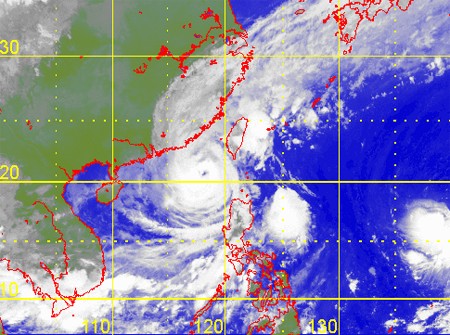
A couple of weeks ago, when the weather was still hot and humid in Hong Kong, my alarm woke me at the usual time of 7.00am. After taking a shower, having breakfast and all the other morning activities, I grabbed my laptop and went down with the elevator.

Walking out of the elevator and the building, entering the street I started to get an unusual feeling, that something was not entirely the same as every other day. Meanwhile, thinking about what could cause my unusual feeling, I walked down the road to the Hong Kong MTR (metro). It is about 8 minutes walk downhill along the road.

"What is wrong today?" Is it the weather? Mmm, not really. It was grey, yes, but it didn't rain, and there was a some wind coming from the other side of the hill, but nothing to be scared of.

"But what was it then?"

It was quite silent this day, something that never happens in Hong Kong. While walking further I noticed that there was really nobody on the street. Usually around this time, the street is full of businessmen going to work, grandmothers walking with the Filipino maids to bring the children to school, and lots of taxi's, cars and buses on the road to transport all those million of souls across the city. But today.. absolutely nothing. No people, no cars, buses. Even the security guards were nowhere to be found.

Even the MTR stations were totally emtpy,
unusual for the rush hour!
"Well I guess I am the only foreigner that doesn't have a free day today. Guess I must have missed something" I thought to myself, and continued my walk to the MTR station.

But when getting to the entrance of the metro, I noticed they had placed a sign near to the elevator:

"Typhoon level 8 is hoisted"
....

That explains it!

During my previous visits to Hong Kong I have experienced some smaller typhoons before, so I was aware of the typhoon level warning system that Hong Kong operates.

This system is in place since 1884 when the Hong Kong observatory began to monitor the tropical cyclones in the South China Sea.

The signals are classified between level 1 and 10 where level 1 means that a tropical cyclone is within 800 KM range, level 3 warns of strong winds, and level 8 up to 10 means very strong wind or a real typhoon with wind speeds up to 12 Beaufort.

When the warning level 8 or higher is issued, the city enters a complete blackout; all the public transportation stops, government institutions close, and highways will be closed or scaled down. Therefore, usually most companies will shut down their operations and send everybody home. People call it a lucky day, as they can go home and stay with the family. (Usually playing mahjong all day)

And this was the reason..Thank you!
Since this signal was issued in the early morning, everybody could stay inside and have an extra free day.
Unfortunately I didn't watch the news, and just went to work without understanding what was going on. Luckily I saw the sign at the MTR station!

Yes, of course it was windy outside, but being born in Holland, a country where I believe it is windy 300 days per year, the storm that was blowing over Hong Kong that day didn't really impress me.

But now I learned my lesson.. if there is any typhoon nearby, check the weather forecast on an hourly basis, like most Hong Kong people do, and who knows you might be lucky!

Friday, November 18, 2011

Election Day

Two weeks ago on November 6, the Hong Kong District Councils election was held in Hong Kong. In all 18 districts of Hong Kong, people could vote for selecting a council member to represent their district. For what I understand is that although there seems to be a democratic process for selecting a district council, these councils actually have little power and can only advise on topics like traffic related issues, or local services offered by the government. Nevertheless the elections seem to draw quite a lot of attention around the neighbourhood.

I happened to got to know about these elections a couple of months ago, when I was going back home after work. My apartment is about 8 minutes walk from the local MTR station, which (to me) does not seem to be that far. However, as most Hong Kong people have limited time, there are several minibuses driving between the MTR station and my building so that you never have to wait more than 5 minutes to take a bus to drive you home in no time. (It saves you about 3 minutes, isn't it amazing!)

Dr. King!
When I was walking to the minibus I noticed a man standing there, giving out folders with information. Next to him there also was a big poster with his face and his name, and some Chinese text.
Dr. King (that was his name according to the poster) saw me and immediately approached me and gave me one of his folders. He explained to me that he was running for the elections and asked me to please vote for him, as he did many good things for the neighborhood. For example, he told me that he was the person that got the air-fan (that blows some air in your face when you are waiting for the minibus) replaced as the old one was broken. I smiled, went on the bus and thought by myself that I would also run for the elections after such major achievement. Hell, why not running for president?

A couple of days later I had to go to work in the morning. When I exited my apartment and walked down to the MTR, I noticed that Dr. King had himself installed at a strategic point again, and gave out more folders. When I passed him he smiled and said "good morning, please vote for me", which he also said in Cantonese to the other people passing by.

The same happened the next day, and the day after, until some day, when I walked down again, I realized that Dr. King was not alone. Suddenly, another competitor had decided to join the daily process. He installed himself a little bit more up the road so people would pass him before they passed Dr. King, and he had one flag placed behind him that has his smiling photo, his name (Chan Kai Yuen) and the election logo. Whenever somebody passed him, he put on his (very well trained) smile, waived, and said "joohhsaahn" (which translates to Good Morning).

Chan Kai Yuen
All this seemed to make Dr. King a little bit uncomfortable. Although he held himself strong and gave a similar smile, I could tell that this wasn't his best day. The next day (on my usual route) they installed themselves again. However this time Dr. King probably woke up earlier and put himself on the same spot that Chan Kai Yuen had occupied the day before. Feeling confident in himself again, he had his usual calm smile and the good morning greeting.

However, Chan Kai Yuen was not being outsmarted yet. Probably expecting such a move, he brought with him 2 extra flags and put them behind him on the fence. Even though he was stationed lower down the road, he was still drawing more attention to himself with the big shiny green flags and his more than perfect smile on the photo.

A couple of days passed by, during which Dr. King and Chan Kai Yuen changed positions, bought more flags, until I noticed that they both began to hire assistants. First I noticed that Dr. King had recruited (I assume) his son, who was handing out folders. But Chan Kai Yuen followed with a whole bunch of helpers, with flags and folders which looked so professional that Dr. King could not fall behind, and used the same strategy.

After a couple of days of equal stability, (flags, assistants, folders, smiles, good morning's) I noticed that Dr. King was not at his usual place that morning. "Perhaps he was ill?" I thought, while walking to the shopping center in which the MTR is located. Then suddenly, after going down with the escalator, Dr. King appeared and with a big smile and even bigger confidence, waived everybody his good morning again. He did it! He outsmarted Chan Kai Yuen ultimately!

This tactic lasted for a couple of days, until Chan Kai Yuen did a counter attack and also stationed himself near the elevator, but on a different level so he could wave not only to the people going down, but also to the people leaving the MTR and going up the elevator. Smart move!

During the last days before the election, they changed positions frequently, and their smiles got even bigger. Chan Kai Yuen even bought an election belt, a green with gold belt hanging around his neck (similar to the one that Miss World has). More flags, more assistants, more folders, and bigger smiles.

The final day before the election I was working at home. Suddenly I heard a loud noise outside which sounded like a couple of African drums. *BANG* *BANG* *BANG*, repeatedly for minutes. I decided to ignore it until I got so annoyed that I looked out of the window. What I saw was the final trick of Chan Kai Yuen; he really did it well today. All his assistants were marching in the street, following a big drum at the start of the parade. They were having all the big flags and were waving to the (astonished) people on the street. Then finally I saw the master himself, dressed up and waving like a real winner. I thought to myself that this must be the final blow to his competitor. How is Dr. King ever going to beat this?? Impossible. The game is over, there is no way that this show could be matched.


And I was right. When I read the news the day after the election, I saw that Chan Kai has won the elections and now is the Elected member of the Eastern District Council Constituency of Kornhill. Even though I feel sorry for Dr. King, I think that Chan Kai Yuen deserves the honour.

I almost felt sad that the elections were over. I'd miss the generous smile of Dr. King and the smart moves of Chan Kai Yuen, now that they will not be there anymore in the morning. But how surprised I was that next day, when I came down the elevator, Chan Kai Yuen was back! Smiling more than ever, he was thanking the people for all their support.

And even though, for an outsider such as me looking at the spectacle that happened last weeks, I do appreciate this last action. It shows a true sign of respect!

Friday, November 4, 2011

Published interview with BlogExpat site

I recently have been interviewed by the BlogExpat site and today they have posted the article which references my "Being Dutch in Asia" Blog. You can read it at the link below. (if you find it interesting)

BlogExpat Interview: From The Netherlands to Hong Kong

Thursday, October 27, 2011

Culture Differences - My Personal Experience in Malaysia

Everyone that has lived or travelled in Europe knows that even though Europe is a reasonably small continent, so many different cultures exist next to each other. We have the Germans who are punctual and accurate, we have the Italians who are passionate and outgoing, we have the French who are Romantic, and so on and so on.

Although it seemed to me that these differences were very normal, it never occurred to me that in Asia you also have these kind of cultural differences until I lived and travelled here. One example of the differences became obvious to me when I travelled to Malaysia recently to manage an IT implementation project.
Kuala Lumpur
The project lasted for two weeks, and in the middle of the implementation, we encountered a serious problem with a new fiber-optic Internet line in our office. The result of the problem was that there was no connection possible between our Malaysia office and our worldwide network. We discovered the problem in the morning, just after arrival to the office and immediately called our IT business partner who was responsible for the line. They came reasonably quick, but after an hour of two doing troubleshooting, they said:

"OK, it's not easy to fix. Let us first have some lunch and then we will think about how to solve it".

At first I thought that I perhaps didn't hear his words correctly. Did he really want to have lunch now, while the office has no network, and leave the staff here being unable to work? But then I heard that everybody agreed, including the office management, so we went for a 1,5 hour lunch break, and had very tasty Malaysian food.

Still surprised about this action, I thought to myself that such a thing would have never happened in Hong Kong. For the average person in Hong Kong, time is considered to be most precious, and as there is not much free time besides work and sleep, people don't want to spend unnecessary time waiting for something. The same counts for companies as well. If there is a problem, it should be fixed as soon as possible.

The great Malaysian food we had while I was worrying
about the internet line.
For example; The average time that a Hong Kong person spends in a restaurant is about 30 minutes. If the food is not served within 5 minutes after ordering, people start to get annoyed.

Another example is when people are going up and down in a lift, they will press the "close door" button immediately after they enter. They don't have the time to wait for your "lazy" ass to walk in the elevator, so if you are not fast enough getting in, the door will be shut right before your nose and you have to wait for another one.

I have that experience, yes.. a 70 year old lady pushed so hard and quick on the button that I didn't stand a chance...and she looked at me from the other side of the door while it closed in front of me for the last few centimeters..

There are lots of other examples I can make, but I think I made my point, Hong Kong people are always busy, and they do not want to spend unnecessary time. (Which is not a bad thing by the way.) So when I informed our headquarters in Hong Kong that our network connection was broken, and that the whole crew, including our staff, decided to go on a lunch break first, you can imagine how the reaction was. (Luckily the team was able to fix the problems quickly when they returned from lunch.)

During my two week stay I discovered more of these acknowledging moments that the Malaysian culture is quite different from Hong Kong. The pace, the action, everything goes with a certain smoothness, that I have not experienced in Hong Kong, ever. Whatever happens, there is another day tomorrow. And luckily it's always summer in Malaysia!

For people that have not been here, I would say, you can compare it with the Greek doing a project for Germans... then I think you know what I mean..

However,  I must admit, there is a positive side about the way the Malaysian people take on their daily pace of life. They are so relaxed but also friendly and helpful as well. I guess they must have a lower amount of health problems related to stress too. So... I recommend any overworked HK expat or local to stay there a few weeks. You'll feel reborn!

Saturday, October 1, 2011

Commuting in Hong Kong

As of today I have been officially living and working in Hong Kong for one month! Since my start here the weeks have been so busy that already this month passed before I realized it, so it is about time that I continue my blog here.

Since the beginning of September I have been a regular Hong Kong commuter on the MTR. MTR? ... Yes, sorry for outsiders I mean Metro. MTR stands for mass transport railway, and is the name of the company that services the metro in Hong Kong. However, the word MTR is so commonly used that it replaced the word metro, so don't be surprised that if you ask about the "metro", most people don't understand what you are talking about.

The MTR railway system is operational since 1979 and currently includes more than 200 km of railway with about 150 stations. It is one of the most popular ways of transportation, as it is fast, efficient and convenient. On the main lines during the day, a new train arrives every 2 minutes(!) so there is no need to rush down when you see a metro waiting. The next one is always coming very soon.

That the MTR is one of the most popular ways of transportation became clear to me as soon as my first working day when I had to travel to work. After leaving my apartment I walked down to the MTR which is about 5 minutes away. Going down the MTR I noticed that it was not so busy as I was expecting. Only 3 or 4 people waiting for every entrance door. However, when the train arrived and the doors opened, a shiver was going through my spine... Inside there were so many people that there was hardly room for all those people inside, let alone for the rest that was waiting outside on the platform to go in.

A usual picture during the rush hour
Hoping for better luck I decided to wait for the next train, but this one was not different from the first, so I decided to follow the rest of the HK locals and push myself in until there was only 1 cm between me and the door which (fortunately) closed without grabbing me. I told myself I had to survive at least 6 stops (the station I needed to exit for my work), and luckily I did.

After a few mornings I concluded that the trains were busy every day, so I accepted the idea that I had no choice but to feel like a sardine in a can. (the one you can buy in the supermarket).

I also discovered that there are some "metro-rules" when taking an MTR journey;

Be quiet and focus only on yourself or your smartphone.

Nobody talks here during the morning ride except when somebody is called on his cell-phone (which is rarely the case in the morning). Besides that most of the people are making not any interaction with others. 90% uses their smartphone to entertain himself by watching online TV or playing games. The other 10% is reading the newspaper.

Get experienced with the amount of millimeters between you and the door that is closing.

This requires some exercise with you being almost ripped to pieces, but in the end you will learn how much space you need so you are still able to enter a train that is already too full.

Know your movement gestures if you want to exit the train.

Do this while the train is nearing your station, by turning around your face towards the door, so the people around will notice that you want to get out. Usually this is enough and when the door opens they will make some little space for you to exit. If that doesn't work, use the word "sorry" or "mh'goi" (the Cantonese for thank you)

Nobody talks with each other.
Everyone is focused on him/herself
No matter if some old lady is standing, if you are lucky to get a seat, you won't give it to anybody.

In Holland it is usual practice to give up your seat to the elderly or impaired. "Please madam, take my seat". However, in Hong Kong I have not seen anybody doing this. They are ignoring whatever is around them, even if an old lady is struggling to stay on her feet in the train.

When you take the elevator, stand on the right if you are standing still. 

People will get annoyed when you are standing still on the left side as this side is for people that are in a hurry, so make sure you follow this rule to avoid angry faces behind you.

Make yourself accustomed with the best locations in the train, and practice to get there before anybody else can.

There are some area's in the train which are the most convenient when you commute in those busy trains. The area's near the door give you the convenience of the back wall to lean against, and makes it easy to exit during rush hour. These locations are well protected by people, and whenever one comes free, you should act within a second, otherwise it is already taken by someone that has senior experience over you with this exercise. Bummer!

Once you get accustomed to the rules, the ever busy trains and the individuality, the Hong Kong MTR system is very convenient. I don't want to trade in my 20 minute MTR ride with the one hour car drive I had in the Netherlands!